

Cobb County Solicitor General Makia Metzger is doing something most people never hear about. She is quietly reshaping how misdemeanor justice works in one of Georgia’s largest counties, and the results are hard to argue with. Over 200 young people have completed her Youthful Offender Program. Zero have reoffended. Her office has cleared bench warrant backlogs dating back to the 1990s. And she is pushing hard for real solutions to the mental health crisis filling Georgia’s jails.
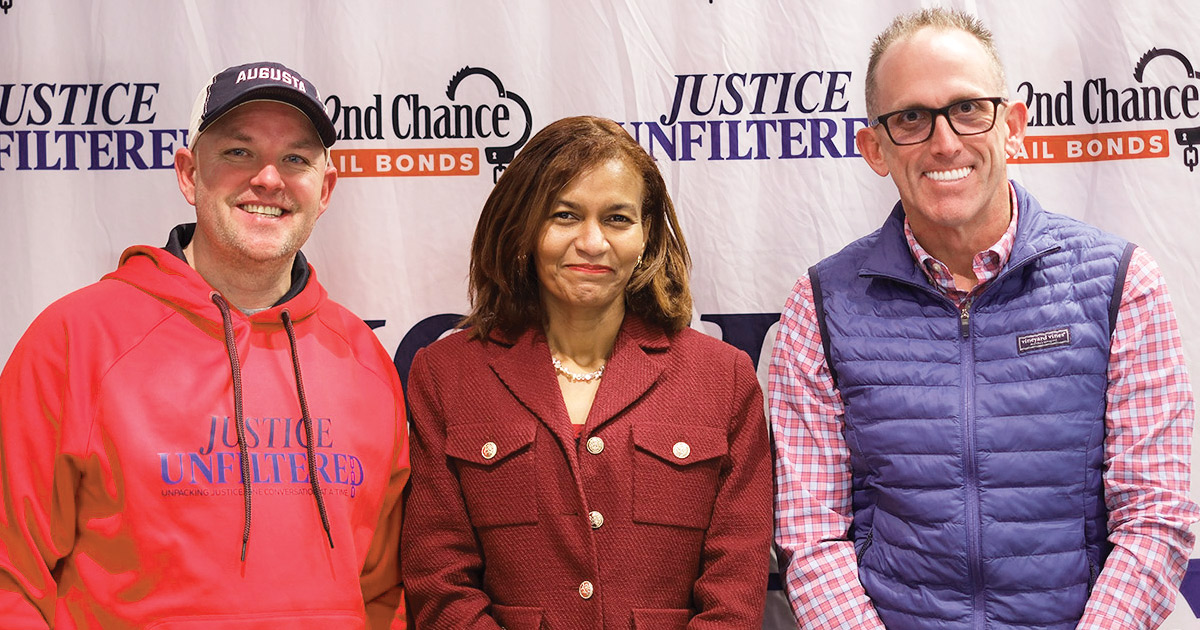
In a recent episode of Justice Unfiltered, Metzger sat down with hosts Tug Cowart and Daniel Matalon, CEO of A 2nd Chance Bail Bonds, for a wide-ranging conversation about what it actually looks like when you prioritize people over politics in the justice system. The episode covered everything from digital modernization to domestic violence victim advocacy, and it left little doubt that Cobb County’s Solicitor General is not just talking about second chances. She is building a system that delivers them.
What Does the Cobb County Solicitor General Actually Do?
Most people have never heard of a solicitor general. That is understandable. It is not the kind of title that makes the evening news. But the role is huge.
The Cobb County Solicitor General’s Office prosecutes misdemeanor offenses in State Court. Think DUI charges, simple battery, domestic violence cases, disorderly conduct, public intoxication, traffic violations, and similar offenses. Metzger’s office handles roughly 30,000 to 35,000 cases per year. That is a staggering number for cases that many people dismiss as “not that serious.”
But as Metzger explained on the podcast, these cases are serious. Vehicular homicide in the second degree, where someone dies in a wreck that was not intentional, is a misdemeanor. So are many domestic violence cases that involve children and weapons in the home. These are the situations where early intervention can change the entire direction of someone’s life, for better or worse.
In Georgia, a misdemeanor conviction can carry up to 12 months in jail and a $1,000 fine. That alone can cost someone their job, their housing, and their stability. The ripple effects go far beyond the courtroom. That is exactly why how these cases are handled matters so much.
The Cobb County Solicitor General’s Youthful Offender Program Is Working
The standout story from this episode is Metzger’s Youthful Offender Program. Launched in March 2024, the program targets 17 to 25-year-olds facing non-violent misdemeanor charges. The idea is simple. Instead of processing these young people through the traditional system, the office works directly with them to figure out what they actually need.
Maybe a young person stole a bike. Maybe they got into a fight. Whatever it is, the program asks a question that Metzger says nobody may have ever asked them before: “What do you want to do with your life?”
From there, the requirements are built around real goals. If someone wants to become a forklift operator, they sign up for that training. If they need to get into Chattahoochee Tech, the office connects them with the application. They need to get a job and provide a pay stub. They make restitution to whoever was harmed. And the office connects them with local faith communities, churches, mosques, synagogues, and youth organizations in their own neighborhood, so the support stays close to home.
When participants complete everything, their case goes away.
Metzger told Justice Unfiltered that in the first year, 98 individuals graduated from the program. In 2025, that number grew to 104. Across all 200-plus graduates, the program has recorded zero recidivism. That is not a typo. Nobody who completed the program has reoffended.
Research supports this approach. Brain science shows that the frontal lobes of people between 17 and 25 are still developing. That part of the brain controls impulse control, judgment, and decision-making. Programs that recognize this reality and respond with structure and opportunity rather than just punishment tend to produce better outcomes across the board.
Why Parents Love the Youthful Offender Program
One of the more interesting details from the conversation is that the parents, particularly the mothers, are often the biggest supporters of the program. As Metzger pointed out, when it is the state requiring a young person to take certain steps instead of just mom nagging, the dynamic changes. There is an extra incentive. And the outcome is real: a clean slate and a fresh start.
Cowart echoed this on the show, noting that kids are far more likely to listen to someone outside their parents. That rings true for just about any family. The Youthful Offender Program essentially gives parents an ally and gives young people a reason to actually follow through.
Clearing Bench Warrant Backlogs From the 1990s
Another major accomplishment Metzger discussed is the effort to clear out old bench warrants. Some of these dated back more than 30 years. That means someone could theoretically be pulled over for a minor traffic violation and get arrested on a warrant from the 1990s.
Metzger called it a public safety concern. She does not want officers putting themselves in danger over old, low-level offenses that should have been resolved decades ago. She also sees it as a resource issue. At some point, you either pursue a case or you do not. Hanging onto warrants from another era does not serve anyone.
This kind of cleanup is not glamorous work. But it directly affects people’s lives. If you have ever wondered why someone with a minor offense from years ago suddenly finds themselves in handcuffs during a routine traffic stop, old bench warrants are often the reason. Clearing those out is a practical step that protects both citizens and officers.
If you or someone you know is dealing with an outstanding warrant or a recent arrest in Georgia, understanding the bail bond process is an important first step. Getting out quickly can help you keep your job, stay in your home, and prepare your defense.
Mental Health in Jails Is Costing Cobb County Millions
The most sobering part of the episode was Metzger’s breakdown of the mental health crisis inside Cobb County’s criminal justice system.
She shared that Cobb County has roughly 350 individuals cycling through the system who are unhoused, struggling with mental health conditions, and charged with low-level offenses. These are your criminal trespass charges, loitering, panhandling, and public indecency (often because they are using the bathroom outdoors with nowhere else to go).
The cost? About one million dollars for every 10 days of jail time for that population. With average stays of around 30 days, that is approximately $3 million a year. And here is the part that should bother everyone: that money is being spent on basic housing. It is not providing substantial mental health treatment.
Metzger was blunt about it. “You can’t treat mental health in a concrete four-by-four with a two-by-two window,” she said. She is pushing for residential facilities and temporary housing options where low-level, non-violent offenders can actually receive rehabilitation and support.
This is not just a Cobb County problem. Across Georgia, jails have become the state’s largest de facto mental health facilities. The Georgia Sheriff’s Association has reported that hundreds of inmates are regularly waiting to be transferred to mental health resources. Average wait times for mental health competency evaluations have stretched past 10 months in some counties. Georgia has been working to build more behavioral health crisis centers, with the state budget including funding for new facilities in recent years. But the gap between what exists and what is needed remains wide.
Metzger is clear that she wants Cobb County to be part of the solution, not just managing the problem.
Modernizing the Solicitor General’s Office With Digital Case Management
When Metzger took office, she inherited a system that still relied heavily on physical paper files. Discovery was done manually. Subpoenas were hand-delivered. Files got lost, and when files got lost, cases could be compromised.
She brought in a digital case management system that allows her team to work entirely from their laptops. Files are digitized. Subpoenas can be sent electronically (called eSubpoenas). Discovery is handled digitally. The entire operation runs faster and leaner than it did before.
This matters more than people realize. Georgia is actually in the middle of a statewide effort to modernize court operations through a new Case Management System (CMS) that will improve data sharing, reporting, and security across the state’s courts. Cobb County’s Solicitor General’s office is ahead of the curve on this.
Metzger admitted there was pushback from longtime staffers who had done things the old way for 20 years. But she pushed through it. And now, those same people are thanking her for getting them out of their comfort zones. Nobody is asking to go back to paper files.
For anyone involved in the justice system, whether as a defendant, a victim, or a family member, faster and more organized case processing means less time waiting in limbo. It means fewer lost files and fewer delays. A 2nd Chance Bail Bonds works with clients across metro Atlanta every day, and one of the most common frustrations people face is simply not knowing what is happening with their case. Digital systems help fix that.
Domestic Violence Victim Advocacy and Trauma-Informed Spaces
Metzger also discussed her office’s work supporting victims of domestic violence and sexual assault. Under Georgia law, the Solicitor General’s office is required to serve victims of intimate partner violence, and the statistics are sobering. One in four women and one in seven men will experience physical or sexual violence from an intimate partner in their lifetime.
When Metzger started, she noticed the office lacked dedicated space for victims and their families. Courtrooms are cold and clinical. Victims would sometimes bring their children with no comfortable place to wait. So she created a trauma-informed room with comfortable furniture, books and stuffed animals for kids, snacks, and a warm atmosphere designed to help people feel seen and supported during an incredibly difficult process.
She also upgraded the victim advocacy staff. Previously, people were moved into victim advocate roles as a way to get a raise, regardless of their qualifications. Metzger now requires all victim advocates to have social work experience and college degrees. The team also undergoes ongoing certification and continuing education every year.
“If you don’t know how the cycle of violence affects a person, how are you going to help them?” she said on the show.
This aligns with a broader push across Georgia for trauma-informed approaches to domestic violence. The Georgia Commission on Family Violence continues to expand training programs statewide, and organizations like LiveSafe Resources in Cobb County delivered more than 15,800 essential services to survivors in a recent year, including emergency shelter, legal advocacy, and trauma-informed counseling.
If you or someone you know is dealing with domestic violence charges or is a victim seeking support, A 2nd Chance Monitoring offers GPS and alcohol monitoring solutions that courts often use as alternatives to incarceration. These tools can help keep victims safe while allowing the legal process to move forward.
What the Jury System Gets Right (and Why Life Experience Matters)
One of the lighter but still insightful parts of the conversation was about jury duty. Daniel Matalon shared his own recent jury duty experience in Cobb County State Court, and Metzger used the moment to explain why she values jurors with real life experience.
She wants people who have actually been around alcohol on a DUI jury, because they know what impairment looks like. She wants people who can handle nuance and gray areas. She even shared a story about a civil attorney who served on a criminal jury and ultimately voted to convict based on the evidence, proving that intelligence and life experience matter more than which “side” someone is on.
Metzger also made a point that stuck with both hosts: if someone genuinely does not want to serve on a jury, she does not want them there either. A defendant deserves jurors who take the process seriously. The state deserves the same. Forcing someone to sit through a trial when they have no interest in paying attention is not a fair trial for anyone.
Why Smart Misdemeanor Justice Matters for Everyone in Cobb County
Makia Metzger is the first African American and first woman to serve as Cobb County Solicitor General. She was elected in 2022 after more than 15 years of prosecutorial experience in both misdemeanor and felony courts, including work with juveniles in Fulton County.
What came across clearly in her Justice Unfiltered conversation is that she is not interested in racking up convictions for the sake of numbers. She is interested in outcomes. Does this young person have a path forward? Is this victim getting the support they need? Are taxpayer dollars being spent wisely? Is there a better answer than a jail cell for someone struggling with mental illness?
Those questions matter whether you have ever been involved in the justice system or not. They affect your taxes, your community, and your neighbors.
The Cobb County Solicitor General’s Office is showing that smart justice and second chances are not soft on crime. They are smarter about it. And the data backs that up.
Listen to the Full Episode
Hear the complete conversation on the Justice Unfiltered podcast, available wherever you get your podcasts or watch on YouTube.
📻 Atlanta’s ONLY All Conservative News & Talk Station: Xtra 106.
About Justice Unfiltered
Justice Unfiltered is a podcast presented by A 2nd Chance Bail Bonds and hosted by Tug Cowart and Daniel Matalon, CEO of A 2nd Chance Bail Bonds and A 2nd Chance Monitoring. The show airs on XTRA 1063 AM, Atlanta’s only conservative news and talk station, and features candid conversations with law enforcement, judges, attorneys, and voices from every part of the justice system. Listen to all episodes here.
About A 2nd Chance Bail Bonds
A 2nd Chance Bail Bonds serves clients across Georgia and multiple states, providing professional bail bond services 24 hours a day, 7 days a week. A 2nd Chance Monitoring offers GPS monitoring, alcohol monitoring, and other court-ordered monitoring solutions to help defendants meet their bond conditions while maintaining their daily lives.
Disclaimer: This article is for educational purposes only and does not constitute legal advice. If you are facing criminal charges, consult a licensed attorney in your jurisdiction.