There are GPS devices on people’s ankles right now, and nobody is watching.
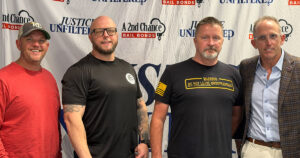
Not in every case, of course. But it happens more than courts realize. In a recent episode of Justice Unfiltered, John Hays, President of JSG Monitoring and the driving force behind the newly forming National Association of Service Providers, said it plainly. Some clients have had monitoring devices on their legs that simply were not being monitored by anyone.
That’s the problem with an industry that has almost no oversight body, no required certifications, and no standard for what “doing it right” actually looks like.
Electronic monitoring best practices don’t just protect defendants. They protect courts, victims, and the public.
How the Electronic Monitoring Industry Actually Works
Most people outside the criminal justice field don’t realize how the monitoring industry is structured. John Hays compared it to the car business, and the analogy is spot on.
Device manufacturers (called OEMs) build the technology. Think GPS ankle monitors, alcohol monitoring devices, and wrist-worn units. These manufacturers are like Ford or GM. They make good products, but most of them want service providers to carry only their equipment.
Here’s the problem. No single manufacturer makes the best GPS device, the best alcohol monitor, AND the best wrist unit. Forcing clients into one product line is like a car dealership that only sells one brand and won’t let you compare.
JSG Monitoring works differently. Over 15 years, John Hays has built relationships with multiple manufacturers. That means JSG can pair each client and each court with the best device for their specific situation, not just whatever one manufacturer sells.
Then there are companies like A 2nd Chance Monitoring (a2ndchancemonitoring.com) — frontline service providers that work directly with courts, attorneys, defendants, and accountability programs across Georgia, Alabama, and Mississippi. They rely on partnerships with companies like JSG to access the right technology and the operational knowledge to use it well.
The “Wild West” Problem in Electronic Monitoring
The electronic monitoring industry has a serious accountability gap. Right now, anyone can technically offer monitoring services. You can undercut established providers on price, carry minimal staff, and skip the 24/7 monitoring infrastructure that responsible companies invest in.
Lyndi Schmidt, Director of Operations at A 2nd Chance Monitoring, described it directly on the show: equipment alone does not separate good providers from bad ones. The difference is who answers the phone at 2:30 in the morning.
John Hays made the stakes even clearer. He pointed to cases where clients had GPS devices on their legs that weren’t being monitored — not because the technology failed, but because the company behind it wasn’t doing the job.
Courts ordering electronic monitoring assume someone reputable is watching. That assumption isn’t always correct.
Here are some of the real risks that come with unregulated providers:
- GPS alerts going unmonitored during nights and weekends
- Unreported violations due to poor documentation practices
- Companies unable to testify accurately in court proceedings
- Defendants sent back to jail over equipment errors a trained operator would have caught
- Courts losing confidence in monitoring as an alternative to incarceration
What Electronic Monitoring Best Practices Actually Look Like
So what separates a high-quality monitoring provider from a fly-by-night operation? John Hays has spent 15 years identifying exactly that, and it’s the foundation of the National Association of Service Providers he is now building.
24/7 Live Monitoring
This is non-negotiable. Violations don’t wait for business hours. A 2nd Chance Monitoring operates around the clock, a direct investment in public safety and in giving defendants a fair chance to stay compliant.
Court Testimony Preparation
When a monitoring company is called to testify, the stakes are high. Lyndi Schmidt shared that as A 2nd Chance grew, courts began requesting that her team testify more frequently. John Hays and his team ran a formal court training program, walking through what preparation looks like, how to present data correctly, and how to speak only to what the technology can definitively confirm. If they are 95% sure a violation occurred, they say so. If they are not certain, they don’t go. That standard protects everyone.
Accurate Reporting and Documentation
Every violation report needs to hold up under cross-examination. That means understanding the specific conditions each judge ordered, knowing what data supports a violation claim, and being able to walk through that data clearly in court.
Vendor-Neutral Device Selection
Good providers don’t lock clients into one manufacturer’s product. They assess what a court or defendant actually needs and choose accordingly.
Ongoing Education for the Criminal Justice Community
A 2nd Chance Monitoring regularly conducts lunch and learns with judges, attorneys, court clerks, and accountability programs across Georgia, Alabama, and Mississippi. The more people understand what monitoring technology can do, the better decisions get made.
The National Association of Service Providers: Raising the Bar Nationwide
John Hays spent about a year working with some of the largest monitoring companies in the country to build what the industry has been missing: a formal association with documented best practices, certifications, and audit processes.
The National Association of Service Providers is close to launching nationally. Here is what it will do:
- Establish written best practices for common monitoring scenarios, like domestic violence cases or alcohol monitoring orders, that are not tied to any specific device manufacturer
- Certify providers who meet those standards, giving courts a way to identify vetted companies before contracting with them
- Conduct independent audits of member organizations so that even well-run companies can identify blind spots
- Reduce insurance costs for certified providers — an important incentive in an industry where coverage is already difficult to obtain
Lyndi Schmidt put the benefit clearly. The Association allows A 2nd Chance Monitoring to compete on the same level as reputable providers, rather than being undercut by operators who skip the infrastructure costs that responsible monitoring requires.
What This Means for Courts, Attorneys, and Defendants
If you are a criminal defense attorney, a judge, or a court administrator considering electronic monitoring as an alternative to incarceration, the company you choose matters enormously.
The technology itself is not the differentiator. The same GPS devices appear across multiple providers. What changes outcomes is whether the company behind that device is:
- Staffed and monitoring 24 hours a day
- Trained to present accurate, defensible reports in court
- Using the right device for the specific conditions of each case
- Committed to notifying courts proactively when issues arise
A 2nd Chance Monitoring serves Georgia, Alabama, and Mississippi. Reach out directly atl 404-419-2052. Learn more at a2ndchancemonitoring.com.
Electronic Monitoring Best Practices Are a Public Safety Issue
It is easy to frame this as a business quality discussion. But at its core, following electronic monitoring best practices is a public safety issue.
When a monitoring company cuts corners, real consequences follow. Defendants violate without anyone catching it. Victims are not protected. Courts lose confidence in a tool that, used correctly, is one of the most effective alternatives to incarceration available.
The work John Hays is doing with the National Association of Service Providers, and the standard that A 2nd Chance Monitoring holds itself to every day, is about making that tool work the way courts and communities need it to.
Because the equipment is only as good as the people supervising it.
Listen to the Full Episode
Hear the complete conversation on the Justice Unfiltered podcast, available wherever you get your podcasts or watch on YouTube.
📻 Atlanta’s ONLY All Conservative News & Talk Station: Xtra 106.
About Justice Unfiltered
Justice Unfiltered is a podcast presented by A 2nd Chance Bail Bonds and hosted by Tug Cowart and Daniel Matalon, CEO of A 2nd Chance Bail Bonds and A 2nd Chance Monitoring. The show airs on XTRA 1063 AM, Atlanta’s only conservative news and talk station, and features candid conversations with law enforcement, judges, attorneys, and voices from every part of the justice system. Listen to all episodes here.
About A 2nd Chance Bail Bonds
A 2nd Chance Bail Bonds has been reuniting families for nearly 20 years. What started as a single office in Metro Atlanta has grown to multiple locations across Georgia and Alabama. Our licensed bail bond agents are available around the clock to provide fast, respectful service to every family we work with.
Disclaimer: This article is for educational purposes only and does not constitute legal advice. If you are facing criminal charges, consult a licensed attorney in your jurisdiction.