
Fulton County Commission Chairman Robb Pitts is making a bet that you can ease overcrowding at the Rice Street Jail without spending two billion dollars on a brand new building. He calls it his five-point plan, and a big piece of it leans on tools that A 2nd Chance Bail Bonds and A 2nd Chance Monitoring know well: ankle monitors, court reminders, and pre-arrest diversion.
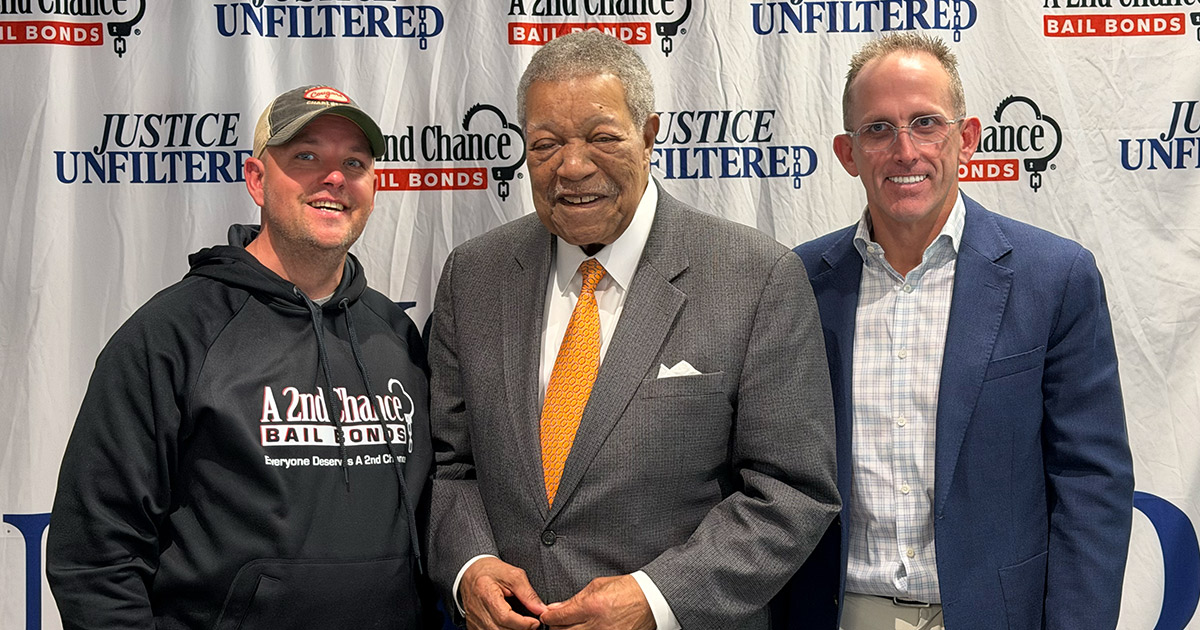
On the latest episode of Justice Unfiltered, Pitts joined hosts Tug Cowart and Daniel Matalon, CEO of A 2nd Chance Bail Bonds, to walk through the plan, the politics, and what it could mean for thousands of people sitting in jail on minor offenses.
Why the Rice Street Jail conversation matters
The Fulton County Jail at Rice Street has been the subject of headlines, lawsuits, and a federal consent decree. Sheriff Pat Labat has pushed for a brand new jail. Pitts has pushed back.
His argument is simple. Build a bigger jail, and you fill it. Spend that same money treating the people who shouldn’t be there in the first place, and the population goes down on its own.
Roughly 70 percent of detainees at Rice Street have a mental health or substance abuse issue, according to Pitts. The county has approved more than a billion dollars to renovate the existing jail and build a separate special-purpose medical facility on the same footprint to treat that population. The new facility is expected to open in 2031, with renovations to Rice Street running through 2035.
That’s the long road. The five-point plan is the short road.
The Robb Pitts five-point plan, explained
Pitts says the plan would not cost taxpayers an additional dime. The pieces are already in place. It is a matter of using them.
1. Ankle monitors for non-violent detainees
For people who do not pose a public safety risk, electronic monitoring lets the court keep track of them without keeping them locked up. It also lets them keep working, keep paying child support, and keep showing up for their families.
This is the same technology that A 2nd Chance Monitoring uses every day. GPS tracking, alcohol monitoring, and check-in services that meet the conditions of release the court has set, while clients work through their pending case. (For our pretrial monitoring clients, the conditions are framed around release, not a sentence that hasn’t been handed down.)
2. Release people who shouldn’t be in there in the first place
Pitts gave Fulton County District Attorney Fani Willis credit on this front. After he announced the plan, she sent a memo asking her team to look at active caseloads and identify people who could safely be released on monitoring instead of held at Rice Street.
For families navigating an arrest, the first call is often about getting their loved one home. A 2nd Chance Bail Bonds works with families across Fulton County and surrounding counties around the clock to make that happen.
3. Court date reminders
This sounds small. It isn’t.
Pitts compared it to a doctor’s office calling the day before an appointment. Right now, a missed court date can land someone right back in custody on a failure to appear, even if their original charge was minor. A simple reminder system, the kind anyone with a phone is used to, could keep a lot of people out of a cell.
4. Use the Center for Diversion and Services
The county and the city of Atlanta jointly fund a diversion center in downtown Atlanta. Each puts in $2.5 million a year. It is operated through Grady Hospital and a partner organization called PAD.
For minor offenses, an officer can give the person a choice: go to Rice Street, or go to the diversion center. The center can hold someone up to 24 hours with no charges, and offers a place to sleep, food, clothing, and counseling, all free of charge.
The catch, according to Pitts, is that it’s underused. The center has the capacity for about 40 people a day. It isn’t getting close to that. Pitts says the next step is working with police chiefs across all 15 cities in Fulton County to shift mindset and training so officers actually use the option.
5. World Cup planning and a realistic public safety approach
The 2026 FIFA World Cup is bringing visitors to Atlanta from all over the world. Some of them will get drunk. Some will run into the police. Pitts says putting tourists who broke a minor rule into the Fulton County Jail and expecting them to fly back from Madrid for a court date is not realistic. Diversion is the smarter move.
What this means for families across Georgia
If the five-point plan works the way Pitts says it could, the Rice Street population could drop by roughly 1,500 people. That is real relief for the county, for taxpayers, and for the families on the other end of every booking.
For families who get the late-night call, the path home often starts the same way: figuring out where the person is being held, finding a licensed bondsman who knows the local jail, and posting bond. A 2nd Chance Bail Bonds maintains an inmate locator for the metro Atlanta area to help families take that first step.
Once a person is released, the work isn’t over. Court appearances have to be kept. Conditions of release have to be followed. That’s where electronic monitoring through A 2nd Chance Monitoring can come in, when the court orders it, helping clients stay accountable while their case moves forward.
What Pitts is also working on for South Fulton
The jail conversation took up a chunk of the episode, but Pitts also walked through several projects he says will reshape South Fulton County:
- A three-phase Grady Hospital partnership in South Fulton, starting with a freestanding emergency clinic and ending in a new 200-bed hospital, jointly funded by Fulton County, Grady, and the Fulton-DeKalb Hospital Authority
- A botanical garden under construction in College Park, modeled on the kind of facility you’d find in Piedmont Park
- A roughly $150 million expansion of Fulton County Airport (Charlie Brown), including a longer runway and a new customs facility, designed to one day allow direct flights to Europe
- A truck driving and logistics training school in South Fulton, in partnership with Atlanta Technical College, projected to train around 600 students a year
His argument across all of it: jobs and access drive affordability. If people can earn a living, they can afford to stay in the community.
What it costs to bond out in Georgia
For families looking at this conversation and wondering what posting bond actually involves, here is the short version. In Georgia, the bond agent’s premium is regulated by state law, and a licensed bondsman will walk you through what’s required for the specific case. Collateral varies. The exact terms can vary by county and by the judge overseeing the case, so it’s worth asking questions up front.
You can find the basics on the A 2nd Chance Bail Bonds FAQs page, or call any of the offices around the clock.
Frequently Asked Questions About the Fulton County Jail Five-Point Plan
What is the Fulton County five-point plan?
How do ankle monitors fit into the plan?
What is the Center for Diversion and Services in Atlanta?
How long do Rice Street renovations and the new medical facility take?
How does someone post bail in Fulton County?
About A 2nd Chance Bail Bonds
A 2nd Chance Bail Bonds has been reuniting families for nearly 20 years. With multiple offices across Georgia and Alabama, our licensed bail bond agents are available around the clock to provide fast, respectful service to every family we work with. Whether the charge is a misdemeanor or a felony, we are here to help.
The information in this article is provided for general educational purposes only and does not constitute legal advice. Public safety policy, jail operations, and bond conditions can change, and individual circumstances vary by case, county, and judge. If you have specific legal questions about your situation, please consult a licensed attorney in Georgia. A 2nd Chance Bail Bonds is a licensed bail bond agency, not a law firm.