
If someone you love was just arrested, you probably want to know how judges set bond in Georgia. According to veteran Atlanta criminal defense attorney Lawrence Zimmerman, a judge is supposed to weigh a short list of risks: whether the person is likely to flee, whether they pose a danger, whether they might commit a new felony while the case is pending, and whether they might intimidate a witness. The charge matters. It is not supposed to be the only thing that matters.
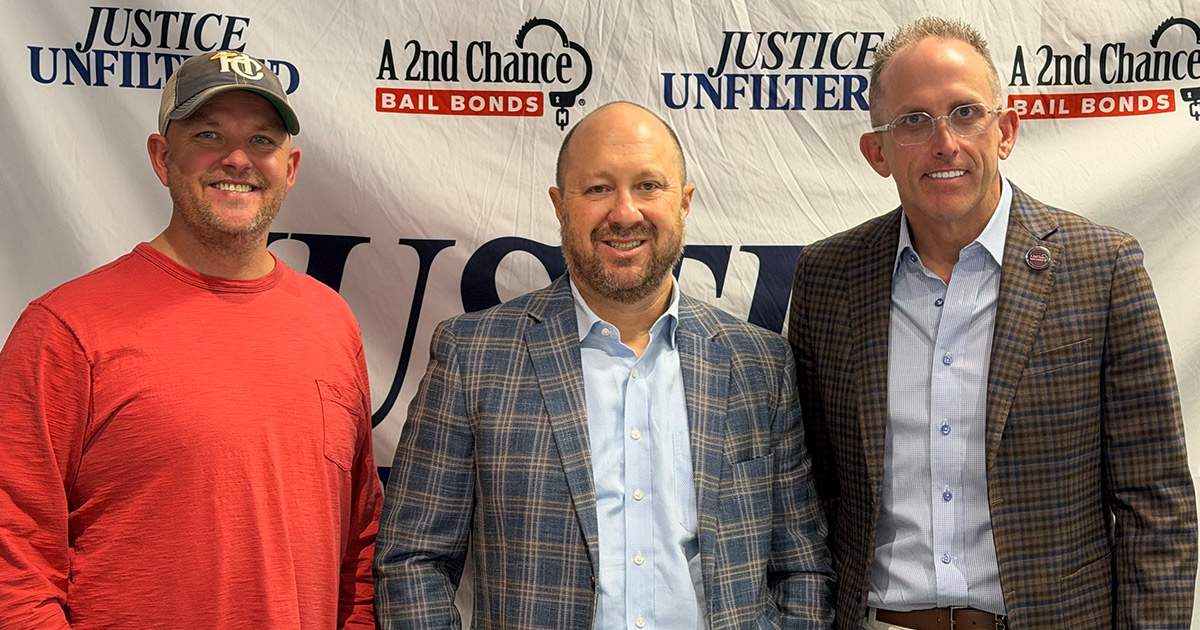
Zimmerman joined hosts Tug Cowart and Daniel Matalon on a recent episode of Justice Unfiltered, presented by A 2nd Chance Bail Bonds. He has spent 25 years defending people accused of serious crimes in Georgia’s state and federal courts. Friends call him LZ. So do a few judges.
Who is Lawrence Zimmerman?
Lawrence Zimmerman is an Atlanta criminal defense attorney and the founder of the Law Office of Lawrence J. Zimmerman. He opened his own firm within six months of becoming a lawyer, after interning at the public defender’s office in Miami and moving to Atlanta on a whim, knowing exactly one person in town.
He told the hosts he never wanted a big firm job. He wanted the courtroom. “It’s like playing sports,” he said of the adrenaline that comes with trial work. The preparation is the lonely part. Before a recent trial, he spent two months getting ready and said it was hard to focus on anything else, even at home with his family.
That trial ended well for his client. Zimmerman said the person was facing multiple counts that carried life in prison, and that the state offered a misdemeanor plea in the middle of the trial.
Atlanta viewers may also know him as a legal analyst on 11Alive and Court TV. In August 2026, he was elected to the board of directors of the National Association of Criminal Defense Lawyers. And this was a return visit. He first sat down with Matalon back when the show was called Back Your Blue.
How judges set bond in Georgia, according to a defense attorney
Under Georgia law, judges set bond by looking at risk, not just the charge. Zimmerman listed the factors a judge is supposed to consider: whether the person is a significant flight risk, whether they have ties to the community, whether they are likely to intimidate witnesses, and whether they are likely to commit a felony or pose a danger while the case is pending.
Judges are also supposed to ask a second question. Are there conditions that could lower those risks?
That second question is where a lot of bond hearings are won or lost. Zimmerman described a recent case where his client faced a serious charge but had no record at all. Prosecutors argued the facts of the case. He argued everything else: family, community ties, no prior arrests. The judge denied bond anyway.
So he did something he said he had never done before trial in 25 years of practice. He filed a habeas corpus petition asking the court to take another look. “He’s a great judge, but I think he got it wrong,” Zimmerman said.
Matalon added the view from the bonding side. Setting bond is supposed to be an individualized process, he said, and no two families walk in with the same situation. That is also why a quick search for how judges set bond in Georgia rarely gives a family one clean answer. If you want more background, we cover the most common reasons why courts deny bail.
Can GPS monitoring help someone get bond?
It can, depending on the judge and the county. Electronic monitoring is one of the conditions a court may add when the concern is safety rather than flight.
In the case Zimmerman described, he said the prosecutor told the judge that monitors only show where someone was after the fact. “That’s not true,” he said on the show. “They know every second where the person is.”
Matalon, whose team also runs A 2nd Chance Monitoring, explained that GPS monitoring can include exclusion zones and inclusion zones, with alerts when a line gets crossed. Violations get reported. And his team treats the judge’s order as seriously as the person wearing the device does. “We have to follow that order,” he said.
Can a judge lower a bond that is too high?
Yes, a judge can lower a bond, and Georgia law gives defense attorneys something to work with. Zimmerman pointed out that judges are supposed to take a person’s financial ability to pay into account, a requirement he said was added while Nathan Deal was governor. In his experience, it often gets overlooked.
His reasoning is simple. If a judge has already decided someone is a candidate for bond, the amount should be something the family can reach. “Otherwise, why even bother setting a bond?” he asked.
He also explained what a higher dollar amount is for. A large bond makes the most sense when the worry is flight, because the person has a lot to lose by running. When the worry is safety, he said, the conditions do the work, and the money does not need to be as high.
If a bond has been set and it feels out of reach, read through your options when you can’t afford bail, then call a licensed agent who can walk you through how bail bonds work.
Why every case is the biggest case to the person living it
Cowart asked how a lawyer can treat a drug possession charge with the same care as a case that could end in life in prison. Zimmerman said it is easy. Someone who has never been inside the legal system has no idea how it works, so whatever they are facing is the most stressful event of their life.
“The worst part for anybody, for any human being, honestly, is the unknown,” he said.
Matalon said the same idea drives how A 2nd Chance brings a new client on board. It comes down to the team and to keeping the process as individualized as possible.
Zimmerman has watched that up close. He said he regularly sends families to A 2nd Chance because of how they treat people. “They’re not looking to jam people up. They want to help people,” he said. He also had a message for fellow defense lawyers who are skeptical of the bail industry: “If the state of Georgia is still forcing people to pay bond, you need bonding companies.”
What TV gets wrong about defense attorneys
Most criminal defense lawyers are honorable, ethical people, Zimmerman said, and they talk with each other constantly about staying on the right side of the line. His job is not to prove the state’s case. It is to hold the state to its burden, a role written into the Sixth Amendment.
He had kind words for a DeKalb County judge, too. During a recent hearing, she told the courtroom she could feel herself getting frustrated, so she stopped, took a breath, and came back to the request in front of her. She granted it. Zimmerman gave her credit for recognizing the moment and staying neutral.
He also made a case for jury duty, which he called an honor. “I think the best way to serve your country is to be a juror,” he said. People assume they will never need a fair jury. He has represented plenty of people, police officers included, who never thought they would need to call him.
The I-85 bridge fire case
Many Atlantans remember the 2017 fire that brought down a section of I-85. A homeless man was charged with starting it. Attorney Mawuli Davis pulled together a team of Atlanta lawyers to defend him for free, and Zimmerman was one of them.
He said it was one of the few high-profile cases where strangers called to help instead of criticize. Highway engineers from around the country offered to testify at no charge, because they did not believe one person could have caused that collapse.
The team believed they could win at trial. But their client was living with serious mental health needs and had no other way to get services. So they accepted an offer that moved the case into a mental health court program. He completed it, and the charges were dismissed.
How to reach Lawrence Zimmerman
You can reach the Law Office of Lawrence J. Zimmerman at 404-351-3000 or at atlantanotguilty.com. He admitted he is not much of a social media person. He would rather be at home with his guitar and a growing vinyl collection. His top pick is Jason Isbell and the 400 Unit, live at the Ryman.
Hear the full conversation on Justice Unfiltered, on Xtra 106.3 FM, or wherever you get your podcasts.
Frequently Asked Questions
How do judges set bond in Georgia?
Can a judge deny bond in Georgia?
Can a bond be lowered if my family cannot afford it?
Does GPS monitoring help someone get released on bond?
Understanding how judges set bond in Georgia will not make an arrest less stressful, but it does take away some of the unknown. If someone you love is sitting in jail right now, our team is awake and ready to help, any hour of the day. Call (770) 627-3235 or start the process online.
About A 2nd Chance Bail Bonds
A 2nd Chance Bail Bonds has been reuniting families for nearly 20 years. With multiple offices across Georgia and Alabama, our licensed bail bond agents are available around the clock to provide fast, respectful service to every family we work with. Whether the charge is a misdemeanor or a felony, we are here to help.
The information in this article is provided for general educational purposes only and does not constitute legal advice. This article reflects a conversation with a guest, and any opinions expressed are the guest’s own. Bond decisions depend on the facts of each case, the county, and the judge. Laws, procedures, and requirements in Georgia can change, and individual circumstances vary. If you have specific legal questions about your situation, please consult a licensed attorney in Georgia. A 2nd Chance Bail Bonds is a licensed bail bond agency, not a law firm.