

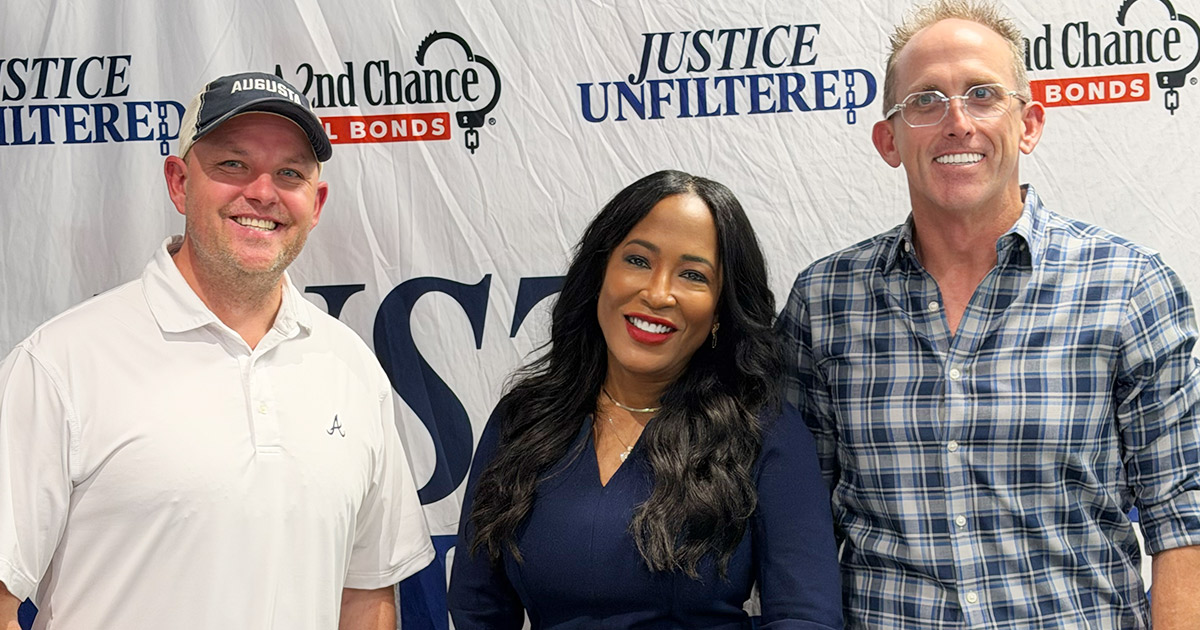
Most people cannot say for sure what the Georgia Attorney General does. So what does the Georgia Attorney General do? In short, the office is the state’s chief legal officer. It advises state agencies, represents Georgia in court, protects consumers, and handles certain criminal cases that reach across county lines. On a recent episode of Justice Unfiltered, presented by A 2nd Chance Bail Bonds, State Representative Tanya Miller walked hosts Tug Cowart and Daniel Matalon through the job in plain language.
Miller knows the terrain. She has worked as a federal prosecutor and as an undefeated homicide prosecutor in the Fulton County District Attorney’s Office. She now represents Georgia House District 62 and chairs the Georgia House Democratic Caucus. And, she is also the Democratic nominee for Attorney General in the November 2026 election. Whatever your politics, her breakdown of the office is a useful civics lesson.
Who is Tanya Miller?
Tanya F. Miller was raised in a working-class home in Cleveland, Ohio. She earned her undergraduate and law degrees from Case Western Reserve University, then began her legal career at the national firm Jones Day before taking a federal clerkship. From there, she became a federal prosecutor in New York, handling narcotics, gang, immigration, and fraud cases.
Back in Georgia, she served in the Fulton County District Attorney’s Office, where she prosecuted homicides and crimes against women and children. Today she runs Miller Injury Trial Law and represents District 62 in the Georgia House. She won the Democratic primary for Attorney General in May 2026 and faces Republican State Senator Brian Strickland in the general election on November 3, 2026.
So what does the Georgia Attorney General do?
The Attorney General is Georgia’s top lawyer. As Miller described it on the show, the office works on two tracks. One is advisory and civil. The other is criminal.
On the civil and advisory side, the Attorney General is the lawyer for the executive branch. Georgia has more than a hundred state departments, boards, and commissions, from banking to corrections to education, and the Attorney General serves as their chief legal advisor. The office also represents the state when those departments end up in court.
The civil side: consumer protection
This is the part most people never think about. Miller pointed to consumer protection as one of the office’s most important powers. That includes going after fraud, predatory practices, and what she called junk fees and surveillance pricing. She has been vocal about the scams that target seniors, the fake emails and phone calls that drain savings accounts.
Her point on the show was blunt: fraud does not only hit the elderly. Younger people fall for it too. She described the flood of spam calls and bad links as a kind of harassment that the state has a role in policing. These are her views, shared as a candidate and former prosecutor, and they line up with the consumer-protection role the office has long held.
The criminal side
On the criminal side, Miller explained that the Attorney General has broad authority over gang prosecutions in Georgia. The state’s gang statute lets prosecutors reach crimes committed across multiple jurisdictions, which matters because organized crime does not respect county lines. She named human trafficking, cybercrime, and cases with statewide or multi-county implications as areas where the office steps in.
Local district attorneys still handle the bulk of frontline prosecution. The Attorney General, she said, comes in on the bigger, more complicated matters, or when a governor or a local DA requests help.
Is the Attorney General the same as a district attorney?
No. A district attorney prosecutes cases within a single judicial circuit. The Attorney General works statewide, advises state government, and takes on civil and criminal matters that cross county lines. Miller drew the line clearly: the office is really the state’s prosecutor and chief legal advisor rolled into one.
Why this matters to Georgia families
The justice system touches families in ways they rarely expect, often for the first time on the worst day of their lives. That is where A 2nd Chance Bail Bonds spends its days, helping families get a loved one home while a case moves forward.
Understanding who does what in that system helps. If you are dealing with an arrest, you can start on the post bail page, find answers on the bail bond FAQ page, or use the inmate locator to find where someone is being held. For cases around Atlanta, our Fulton County bail bonds team is available around the clock.
When a case calls for supervision as a condition of release, sister company A 2nd Chance Monitoring provides GPS tracking and alcohol monitoring.
So the next time someone asks what the Georgia Attorney General does, you will have a real answer: the state’s chief legal officer, working on behalf of every Georgian, no matter who they are.
Frequently Asked Questions
What does the Georgia Attorney General do?
Who is running for Georgia Attorney General in 2026?
Is the Attorney General the same as a district attorney?
Does the Georgia Attorney General prosecute crimes?
About A 2nd Chance Bail Bonds
A 2nd Chance Bail Bonds has been reuniting families for nearly 20 years. With multiple offices across Georgia and Alabama, our licensed bail bond agents are available around the clock to provide fast, respectful service to every family we work with. Whether the charge is a misdemeanor or a felony, we are here to help.
The information in this article is provided for general educational purposes only and does not constitute legal advice. This article reflects a conversation with a guest, and any opinions expressed are the guest’s own. It is not an endorsement of any candidate for public office. Laws and government procedures in Georgia can change, and individual circumstances vary. If you have specific legal questions about your situation, please consult a licensed attorney in Georgia. A 2nd Chance Bail Bonds is a licensed bail bond agency, not a law firm.