
Why would an innocent person confess to a crime they did not commit? Atlanta criminal defense attorney Max Schardt has watched it happen. On this episode of Justice Unfiltered, he explains how false confessions take shape inside an interrogation room, why holdout jurors deserve protection, and what nearly a year of testimony in the YSL trial taught him about building a defense.
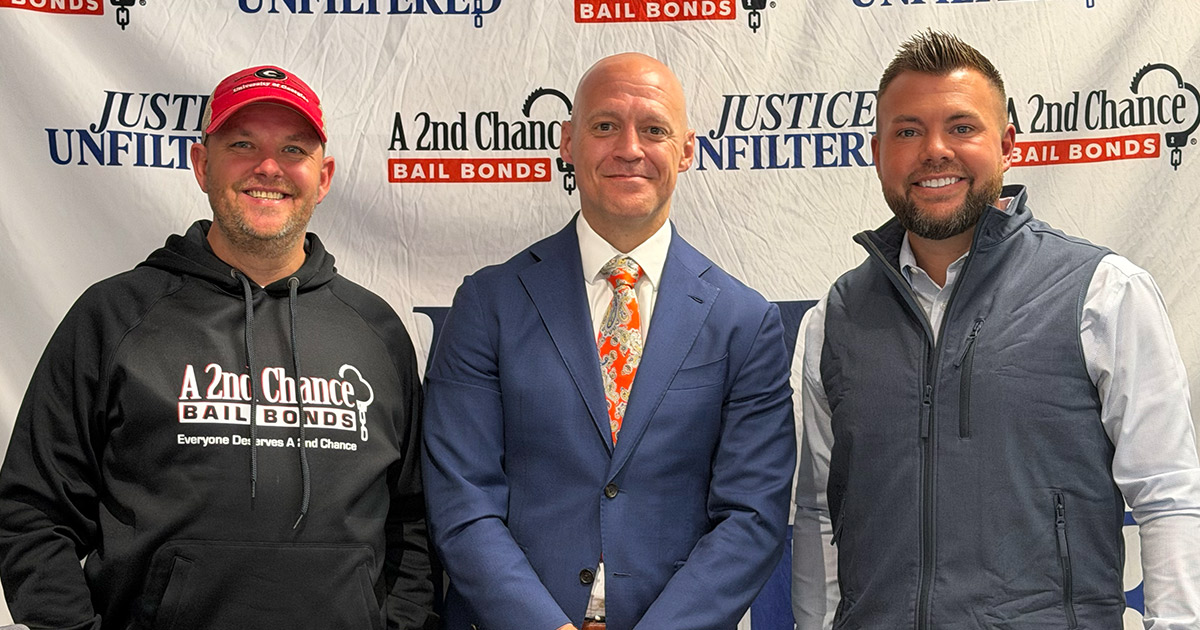
Schardt, founder of Max Schardt Law, joined host Tug Cowart on Xtra 106.3 along with Jesse Fellabaum, Director of Operations at A 2nd Chance Bail Bonds, who filled in for regular co-host Daniel Matalon. The conversation covered murder cases, rap lyrics as evidence, why being out on bond changes how a case gets prepared, and a $1,000 check for a Union City mentoring program.
In short: false confessions come from pressure and a power imbalance, police are allowed to lie during questioning, jurors need to know they are safe when they follow the law, and a client at home can prepare a defense in ways a client in jail simply cannot.
Who is Max Schardt?
Max Schardt is a criminal defense attorney in Atlanta and the founder of Max Schardt Law. He has spent nearly two decades defending people in Georgia courtrooms, including serious felony and murder cases. He earned his law degree at Duke University after attending the University of South Carolina for undergrad, and he has been licensed in Georgia since 2007.
He is best known for representing Shannon Stillwell in the YSL racketeering trial in Fulton County, the longest trial in Georgia history. Stillwell was one of the last two defendants still on trial when the case went to the jury in December 2024. After nearly a year of witness testimony, the jury acquitted him of murder and every other charge except one count of gun possession.
Schardt does not pretend the work is easy. He told Tug that if a defense attorney ever goes numb to it, they probably should not be doing it. A murder conviction in Georgia means a life sentence, he pointed out, so when he takes one of those cases he is usually sitting across from someone’s mother, father, or grandparents with a life in his hands.
And the question everyone asks, how do you represent guilty people, gets a surprising answer. The hardest cases, Schardt said, are the ones where he believes his client is innocent. One day in jail for an innocent person is bad enough. A life sentence for someone who did not do it is what keeps him up at night.
Why do innocent people give false confessions?
According to Schardt, false confessions usually come from anxiety, pressure, and a feeling of powerlessness inside the interrogation room. The person being questioned has no power. The people across the table have all of it. So the person goes along with what they are hearing because they think it will help.
He has seen it firsthand. In one case, his client was a co-defendant who was factually guilty and eventually pled guilty. But a third man, someone his client did not even know, was brought in because his fingerprint turned up on an item in a car that belonged to the victim. Schardt described him as a nerdy, goofy video game player. Police pressed him, raised the possibility of the death penalty, and the man confessed to a killing he had nothing to do with. To his credit, Schardt said, his own client made a point of telling everyone that the man had no involvement.
Fellabaum added the bail angle. Picture someone who has sat in jail for years because they were denied bail or could not afford it, with the pressure of the system and the needs of their family weighing on them. He could see how a person in that spot might say whatever gets them out, especially if a favorable plea is on the table. Not an endorsement, he said, just an explanation.
The real danger, in Schardt’s view, is that most people believe they would never do it. Tug said as much on air: zero percent chance. That instinct is exactly what makes false confessions so hard to fight in front of a jury, because jurors think the same thing. He added that false identifications create a similar problem. Witnesses can be absolutely certain they saw someone and still be wrong.
Can police lie to you during an interrogation?
Yes. Under current law, officers are allowed to use deception during questioning, including telling a suspect that a friend in the next room already gave them up or that video evidence exists when it does not. Schardt confirmed this on air, and Fellabaum said it is the part of the system that strikes most people as not being on the up and up.
Sometimes the tactic backfires. Schardt has watched interrogation footage where police told his client there was video of him committing the crime, and his client sat up straight and said, pull it up, I want to see it. There was no video. He said that kind of reaction, from a person who knows the truth is on their side, can end up looking like evidence of innocence when a jury sees the tape.
There is a second layer. Just because police are allowed to lie does not mean jurors like it when they do. Schardt sees that as part of the defense attorney’s job: showing the jury what actually happened in that room. He also believes jurors today are more aware that mistakes happen. In years past, many assumed police always got it right and that people do not get arrested for nothing. He does not think that assumption holds the way it used to.
Why does Max Schardt say holdout jurors need protection?
Schardt believes that threatening or chastising a juror for an unpopular vote is dangerous for everyone, because the next unpopular defendant could be anyone. Tug raised the issue after a recent, heavily publicized Massachusetts murder trial ended in a deadlocked jury and news reports said a holdout juror received threats. Tug’s reaction was simple: if the court requires you to serve, why is it not required to protect you?
Schardt made two points. First, the defense attorney in that case has a duty to his client and is doing exactly what he should be doing. Second, and separately, second-guessing jurors after a verdict concerns him deeply.
His reasoning comes straight from his own practice. A criminal defendant is rarely winning the popularity contest in the community. The charge may be a sex crime. It may be the murder of someone everyone loved. If a juror follows the law and sticks up for that client’s rights, Schardt wants that juror to know they will be protected. Jury trials are not supposed to be a popularity contest, he said, and jurors are not supposed to go along with what they think everyone else wants.
What did the YSL trial teach Max Schardt?
Schardt called the YSL trial the value of law school times 100. He spent every day in court with Brian Steel, Keith Adams, Doug Weinstein, Bruce Harvey, and other defense attorneys he described as phenomenal, picking up their styles and getting reps in court that most lawyers never get. He said conversations with Steel ran until midnight on the phone after court.
Jury selection alone was a marathon. By Schardt’s count, the court went through close to 2,000 potential jurors. Most self-eliminated with hardship excuses once they heard the trial could last six months or more, and even that estimate turned out to be low. Only after the hardship cuts could the lawyers start sorting out who had bias.
Tug asked about the defense motion to change judges. Schardt said he did not file it himself; Doug Weinstein did, and the defense attorneys supported it as a group. His explanation was that the trial was not proceeding the way a normal trial should, and that an ex parte meeting with a witness had included suggestions that he and other defense attorneys were somehow influencing that witness. He called those suggestions completely unfounded. In his words, the case was not going the way the state wanted because the truth was not what the state wanted it to be.
He also described the moment public perception shifted. Early on, he said, reporters in the daily press pool mostly quoted what the state was saying. Somewhere around the time Jeffrey Williams and other co-defendants took pleas, the reporters started asking the defense more questions. Schardt noticed their eyes getting wider. If the reporters were seeing it every day, he reasoned, the jurors were seeing the same thing. He gave particular credit to independent coverage, including an online commentator known as Thugger Daily who broke down the case accurately day after day.
On nerves, Schardt was candid. He gets anxious the night before a closing argument or a big cross-examination, and he has a habit of wearing out the courtroom carpet pacing in circles. But once it starts, it is go time. Tug, a Navy veteran, compared it to a naval aviator on a catapult. Schardt laughed and said nobody will ever see him in a fighter jet.
Can rap lyrics be used as evidence in Georgia?
Yes. In the YSL case, Schardt said basically every lyric the state tried to use against the defendants was admitted into evidence. His client had roughly five songs admitted. Deamonte Kendrick, who was acquitted of every charge, had songs admitted too. The defense fought that fight and lost it. The acquittals came because the facts did not support a conviction, not because the lyrics were kept out.
Schardt agrees that everyone has artistic license, and that performing a certain kind of art does not make you what you say you are. But he represents several young up-and-coming artists, and he is blunt with them. Some of what they put out can be used against them if someone later accuses them of something. He is not trying to control what anyone says. He just wants them going in with their eyes wide open.
Where is the line? Schardt said the more specific a lyric is, the more weight it carries. But a lyric about something that happened in Atlanta may simply reflect public knowledge or street knowledge, not personal involvement. Tug put it as a question: am I living it, or am I telling the story of what I have seen? Schardt said that is a reasonable place to draw the line, and also exactly where it gets blurry.
During jury selection, the defense could not ask jurors to prejudge the case. What they could do was look for people with a general history and understanding of hip-hop, because anyone who has listened to a lot of it knows that saying something in a song does not make it true. Schardt added that he is always hesitant to make assumptions about jurors based on sex, race, or where they are from.
Why does being out on bond matter for your defense?
Schardt said he has had a couple of recent victories that came down to days of preparation in his conference room, going through discovery with the client in detail. If those clients had been in jail, he does not know if that would have been possible.
There is a way to review a case in jail. You meet in the law library, you schedule it in advance, and you try to play video on whatever setup is available. But most evidence today is not paper. It is body camera footage and digital files. Reviewing all of that inside a jail is, in his words, far from ideal. Posting bail so a client can sit down at the office changes what a defense attorney can do.
Safety is the other reason. Tug asked a hard question about a client of Schardt’s who was stabbed in jail. Schardt said that client was not the only one. He described makeshift weapons and gang activity as sadly common, without blaming any one facility. He tells his clients to keep to themselves, and he admits that is easy for him to say.
Then there is the waiting. Even after a judge grants bond and a bondsman posts it, processing at the jail can take days, and it is not one particular jail. Schardt said defense attorneys spend far too much time on that step, fielding calls every hour from a client’s mother asking what is going on. Working with a bondsman who stays on top of the release means he does not have to check, because he knows someone already is.
Fellabaum explained how A 2nd Chance evaluates a case. There is an underwriting process, and every bond carries some risk, but the agency is looking for any reason to write it. That approach is part of how he and Schardt got to know each other. Schardt said that when a client is granted bond, he shares Fellabaum’s contact with the family right away and tells them, I am sending you to someone I know, so do not mess it up for the next person. If a family member is in custody right now, A 2nd Chance’s inmate locator can help find where they are being held, and the Fulton County bail bonds page explains how release works in the county where the YSL trial took place.
What is Next Level Boys Academy?
Next Level Boys Academy is a mentoring program for young men based in Union City, Georgia, and Schardt serves as a mentor there. He described a program for young men from their early teens to about 25, led by Director Gary Davis and supported by positive male role models, including a longtime volunteer everyone calls Wise Man.
Young men arrive three ways. Some parents bring a son who is acting out. Some arrive because completing the program is a condition of bond. Some arrive because it is part of a sentence. Once there, they find mentoring, an entrepreneurship track, counseling, and a Saturday meeting that is open to the public. Schardt said he has watched young men who were in trouble open lawn care businesses and screen printing businesses with equipment donated through the program.
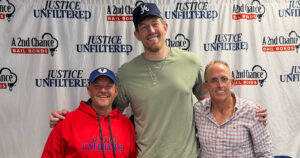
At the end of the episode, Fellabaum presented Schardt with a $1,000 check for Next Level Boys Academy on behalf of the A 2nd Chance Community Foundation, Daniel Matalon, and himself. Schardt said it would go straight to Director Davis and be put to good use. Anyone who wants to learn more or volunteer can visit nextlevelboysacademy.org.
Listen to the full episode
Find this episode and the full archive on Justice Unfiltered, presented by A 2nd Chance Bail Bonds and A 2nd Chance Monitoring. To reach Max Schardt, visit maxschardtlaw.com. He works from a business cell phone, and he said callers are often surprised when he answers it himself.
If someone you love has been arrested, A 2nd Chance Bail Bonds has licensed agents available 24 hours a day. Call (770) 627-3235 or start the process online. For a plain-English walkthrough of the process, see how bail bonds work or browse the bail bond FAQs. And if you have ever wondered how false confessions happen, or why a holdout juror matters, this episode is worth the hour.
Frequently Asked Questions
Who is Max Schardt?
Why do innocent people confess to crimes?
Are police allowed to lie during an interrogation in Georgia?
Can rap lyrics be used as evidence in a Georgia criminal trial?
Why is it easier to prepare a defense while out on bond?
About A 2nd Chance Bail Bonds
A 2nd Chance Bail Bonds has been reuniting families for nearly 20 years. With multiple offices across Georgia and Alabama, our licensed bail bond agents are available around the clock to provide fast, respectful service to every family we work with. Whether the charge is a misdemeanor or a felony, we are here to help.
The information in this article is provided for general educational purposes only and does not constitute legal advice. The stories, opinions, and legal observations shared in this episode belong to the guest and reflect his own experience as a defense attorney; they are not statements of A 2nd Chance Bail Bonds. Laws, procedures, and requirements in Georgia can change, and individual circumstances vary. If you have specific legal questions about your situation, please consult a licensed attorney in Georgia. A 2nd Chance Bail Bonds is a licensed bail bond agency, not a law firm.