
Categories
Blogs

We Love Lawyers: Be Kind to Lawyers Day is April 9.

Let’s face it – attorneys get a lot of grief. So, today, on Be Kind to Lawyers Day, we wanted to show our lawyer friends some love. We penned a poem in their honor. If you read closely, you’ll see we’re offering a sweet treat to the first five attorneys that respond…

We Love Lawyers

Categories
Blogs

Spring Break: How to Avoid Ending up Behind Bars

For college students, it’s an annual rite of passage to be observed with anything but reverence. Spring Break 2019 is now in full swing and it will continue until the end of next month. If you’re a Spring Breaker, take a minute to do a bit of research about your chosen destination before you hit the road. After all, you want to spend your time in the bars – not behind them.

Miami Beach: For example, Miami Beach spent serious money to tell Spring Breakers not to come. The city tapped into social media channels with a media buy exceeding $33,000 to tell college students considering a trip to its beaches that the Miami Beach Police Department was cracking down on unruly behavior. The city even launched a website, MBspringbreak.com, to list which party activities were most likely to lead to an arrest.

Port Aransas: In addition to attempting to pre-empt Spring Breakers’ arrival, some cities and towns have enacted ordinances to make their beaches less attractive. Four years ago, Port Aransas on the Texas coast banned alcohol on the beach after 6 pm. The local police have said that since then, the number of Spring Break-related arrests has been dropping. However, this year, a routine traffic stop discovered a large amount of Xanax, codeine cough syrup, marijuana, alcohol and an AK-47. Police have made three drug busts so far and are arresting 20 Spring Breakers a day on average, usually for alcohol or drug infractions. Most of those arrested, police said, stay in jail overnight before being transferred to Nueces County the following morning.

Orange Beach: In Alabama, Orange Beach took action four years ago to ban alcohol on its public beaches. Similar to the alcohol ban enacted in Port Aransas, the Orange Beach alcohol restriction only affects Spring Break (usually March 1 to April 30). Even with the ban in place, Gulf Shores Police have already made 23 arrests, 18 of which came from a single house party.

Panama City: Two weeks into the official Spring Break season in the Panhandle, the Bay County Sheriff’s Office and the Panama City Beach Police Department reported 220 arrests, about a third of which were for drinking alcohol on the beaches.

Wherever your Spring Break travels take you, be aware that:


Categories
Blogs

How to Prepare for a Court Appearance

Whether it’s your first court appearance or you’ve been to court before, there are several things you can do to help ensure that your respect for the court comes through during this important and potentially life-changing day.

How you appear in court affects the judge’s perception of you. Show him or her that you have respect for the seriousness of the proceedings by:

  • Eating a light breakfast. Nervousness is to be expected when you are appearing in court but there is no reason to deal with a growling stomach, too. Be careful not to have too much caffeine as you do not want to seem agitated.
  • Arriving early. It can be maddening to leave home early for your day in court, only to circle the block looking for parking or end up walking a long distance to the courthouse. Instead, drive by the courthouse a week before your court date to scout out multiple parking locations in case lots are full when you arrive. Being there ahead of schedule also leaves time to discuss any last-minute details or questions you have with your attorney.
  • Dressing professionally. The courtroom is not the place for casual wear. Male defendants should wear a suit or dress slacks and a button-down shirt. Female defendants can dress conservatively as well, either a modest dress, or a skirt/pant suit. Some courts have written dress codes, which are often posted on their websites. It’s a good idea to check the website of the court where you will be appearing to see what’s expected. Your attorney can also answer any questions you may have about preferred attire.
  • Waiting quietly. If you are not immediately called, confer with your attorney and review your legal documents. Get answers to any last-minute questions that you have.
  • Abiding by courtroom etiquette. There are few places where personal behavior is as tightly dictated as the courtroom. For that reason, some Georgia courts have posted on their websites, written statements outlining the behavior they expect to see in their courtrooms. If the court where you will be appearing has such a policy, you need to follow it closely.
  • Turning your phone off. Most courtrooms maintain a ban on cell phones, and signs will alert defendants to the fact that cell phones are not welcome. You should not only silence your phone but turn off the vibration as well. Keep all of your attention focused on the legal proceedings.
  • Following the judge’s directives. Obey all instructions from the judge promptly.
  • Speaking in court. Address the judge as “Your Honor.” Speak only if you are spoken to. After you are called on, rise to your feet, speak loudly and clearly so that you can be heard throughout the courtroom. If you are called to the witness stand, take time to gather yourself before answering each question from opposing counsel.
  • Making the most of a recess. Often, courts will go into recess during the official proceedings. Recesses occur to give everyone a break for lunch or for other matters. The judge will always state how long the recess will last. It is critical that you be back in the courtroom when the court resumes. Take this break as a time to have a snack or visit the restroom. Do not leave the courthouse.
  • Preparing for an immediate verdict. In many cases, a verdict will be handed down the same day. It is important that you have prepared yourself for whatever the decision may be.

While no amount of preparation will completely eliminate the jitters that come with a court appearance, advance preparation can help defendants put their best foot forward on this important day. In addition, your advance work will show the court that you take your situation seriously.


Categories
Blogs

5 Things to Know if You are Pulled Over for a DUI

We all know the adage: don’t drink and drive. Not only is it illegal, but it puts both you and other innocent drivers on the road in serious danger. With safe rides plentiful, it’s just not necessary. If you do, however, find yourself being pulled over under the influence, you should know what to do as well as what your rights are during this scary time.

  1. Pull Over Quickly and Safely

From the time a police officer decides to pull you over, they will begin making observations and documenting everything you do that can and will be used against you in court. From the moment you see a police officer’s flashing lights approaching, you will need to slow down and find a safe place to pull over as quickly as possible. After coming to a complete stop, make sure to put your car in park and turn the car off. Because officers are trained to be cautious when approaching a car, keep both hands on your steering wheel to indicate that you are complying. As always, roll down your window and hand the officer your driver’s license, proof of insurance and registration.

  1. Use Your Manners

While good behavior may not get you out of a DUI charge, your actions will be noted in the police report and could help you in court. Remember to address the officer as “sir” or “ma’am” to show respect as being rude and hostile will certainly not work in your favor. Being polite, however, does not mean that you have to answer the police officer’s questions. The officer might ask you, “Have you been drinking?” or “Where have you been?” Simply answer, “I do not wish to answer any questions. Thank you.” Under Georgia’s Constitution, you have the right to not incriminate yourself, so stay quiet.

  1. Refuse the Field Sobriety and Preliminary Breath Tests

According to the recent changes to the Georgia DUI Law, refusing a field sobriety or preliminary breath test cannot be held against you in court. You are under no legal obligation to complete or comply with these tests. Even if you’ve only had a couple of drinks, a field sobriety test is subjective and during court, is often he said/she said. Hand-held breathalyzer tests are notoriously unreliable as well. When asked to take these tests, simply say “No, thank you.”

On the contrary, police will now need to obtain a warrant for blood or urine samples to prove alcohol level that will either be taken at a medical facility or the police station. While you will have to comply with these tests, often times it can take a while for this process.

  1. Stay Calm and Ask for an Attorney

If you are arrested, remember to stay calm and cooperate with the officer. Everything you say and do at this point can impact your case. Ask for an attorney and do not speak to the officer or answer any further questions while in the police car or at the station. After bail has been set, have a family member contact A 2nd Chance Bail Bonds and we will walk them through the process to get your second chance.

  1. Write Everything Down & Contact a Lawyer

The minute you are released from jail, take out a piece of paper and pen and write down everything that you can remember about the arrest and the circumstances leading up to it. This will help your attorney better prove your case by providing them with crucial details. If you need help finding a defense attorney, check out our blog, “Finding the Right Defense Attorney in a Crowd.”

As always, the best way to avoid a DUI conviction is to not drink and drive at all. Have fun but be safe out there! And, when you find that you need A 2nd Chance, call us!


 

Categories
Blogs

Helping Children When a Parent is Arrested

The Department of Justice estimates that more than 1.7 million American children currently have a parent in prison, many of whom witnessed their parent’s arrest. Just recently, a viral video showed a Florida toddler walking towards police officers with her hands up while her father was being detained by police. This has many debating; how do we protect children during such a scary time?

According to New Mexico’s Children of Arrested Parents (CAP), the following are ways to help children during the arrest and incarceration of a parent:

  • Assure the child that the parent’s arrest is not their fault
  • Inform them what is happening to their parent in an age appropriate-way.
  • Tell them if they can have contact with their parent, and if so, when and how
  • Let them know where and with whom they will be staying
  • Advise what will stay the same and what will be different while their parent is under arrest
  • Let them know it is OK to still love their parent, and it is OK to be angry sometimes too
  • Encourage them to express, in safe and healthy ways, their feelings about their parents and their parent’s arrest
  • Allow them to visit and maintain contact with the arrested parent as much as possible, when permitted and appropriate
  • Provide stability and consistency in their living situations and daily routines
  • Help them feel safe
  • Explain that people make choices in life that lead to different consequences

Police and other organizations are also joining in on the conversation. With the collaborative efforts of psychiatrists, psychologists, police officers, social workers and children themselves, Strategies for Youth have created several important materials including a Guide to Anticipating a Child’s Response at the Time of Arrest that helps police understand perceptions of children by age and appropriate responses.

Many other resources have also been created for children of incarcerated parents such as:

While reactions can vary greatly by age and the circumstances surrounding the arrest, it’s important to not overlook the possible physical, emotional and psychological effects that such an event can have on children. Emotions can range from fear that their parent will be hurt to anger towards police officers. Because of this, both police and caregivers have a duty to respond to children’s concerns honestly and in an age-appropriate way. As always, A 2nd Chance Bail Bonds is here to help you navigate an arrest and work towards reuniting children with their parents.

Categories
Blogs

Finding the Right Defense Attorney in a Crowd

Needle in a HaystackAccording to the American Bar Association, there are nearly 33,000 lawyers practicing in the state of Georgia. As with any profession, not all lawyers are created equally and many simply aren’t the right fit for your particular case. If getting arrested and charged with a crime isn’t stressful enough, finding the right criminal defense attorney can feel overwhelming. So, how do you go about making this incredibly important decision?

Ask for Referrals

Personal experience can speak volumes. Ask your family or friends if they know of any criminal defense attorneys that they would recommend. If you aren’t comfortable asking those in your circle, non-criminal defense attorneys can be a great resource of referrals because they will have had first-hand knowledge of the attorney’s work and organization.

Do Your Homework

Start your own research online. You can visit the American Bar Association which lists state-specific information as well as other professional criminal justice associations such as the National Academy of Criminal Defense Attorneys, the Association of Federal Defense Attorneys and the National Association of Criminal Defense Lawyers. You can also check reviews and referrals from other sites such as Avvo, FindLaw and LawHelp.

Make sure when doing your research that you are focusing on the lawyer’s specialty. For example, you would not go see a podiatrist for an ear infection. You want to find a lawyer with experience defending similar cases to your own.

Ask Questions

Now that you have narrowed your list of criminal defense lawyers that meet your initial requirements, call them and schedule an in-person consultation. Many lawyers will provide a free first-time consultation. This is the most important step in the process as you need to ask questions that will access the lawyer’s areas of expertise, skill level and knowledge. Speak to at least two to three attorneys to gain insight on their approach and make sure that you are comfortable with them. It is important that you have a personal connection with the attorney that is representing you and that their prior experience indicates a good track record and fit for your case. If you are pressed for time, you may call or schedule a video chat.

According to FindLaw, here are some good questions to ask during your consultation:

  • Do you have any experience handling cases similar to mine?
  • How much of my criminal case will you actually handle?
  • How many jury trials have you litigated?
  • How often do you work out plea agreements or ask for a lesser charge?
  • What are your attorney’s fees, and how are they calculated? Do you offer a payment plan?
  • Would you be willing to provide references from clients you’ve helped?

You Get What You Pay For

One of the biggest mistakes our clients make is not hiring an attorney because of the financial commitment. Private attorneys will spend more time on your case as opposed to a public defender. While private attorneys can be costly, keep in mind that it typically can take months before your superior court case is on the docket. Because of this, many attorneys will allow you to make incremental payments over time so long as you have paid in full by the time the court date arrives. This gives you more time to pay rather than paying in one lump sum.

Choosing the right criminal defense attorney can take time, however it is crucial to your case. It’s important not to go it alone. With a good criminal defense attorney, you will have access to expertise and knowledge specific to your case to develop a sound defense strategy.

Categories
Blogs

The Top 5 Holiday Crimes and How to Avoid Them

As the holidays are upon us, we plan for gift-giving, celebrations and time spent with loved ones. Indeed, it is the most wonderful time of the year…and perhaps the most dangerous as well. With parties, family, and alcohol abound, bad decisions put many people on the naughty list during the holiday season. According to Find Law Blotter, here are the top five crimes that spike during the holiday season and how to avoid them to stay on the nice list!

Drunk Driving
With holiday parties and alcohol-a-flowing, many people get caught up in the fun and get behind the wheel under the influence. If your holiday party has you rockin’ around the Christmas tree a little too hard, call someone to pick you up or make sure you have a responsible designated driver ahead of time. Don’t bring in the new year with a brand-new arrest.

Domestic Abuse
While there’s no place like home for the holidays, spending time with family often comes with added stress and heightened emotions. Add in alcohol and bad decisions can and do happen. Many organizations report a spike in domestic abuse and shelter services during the holidays. Before coming home for Christmas, make sure you know how to diffuse domestic situations responsibly and walk away.

Shoplifting
With pressure to buy gifts for your loved ones, friends and, don’t forget the mailman, it’s no surprise that shoplifting is on the rise during the holidays. But before you walk out of Target without going through the checkout line, remember the adage, “It’s the thought that counts.” A homemade card or ornament is certainly better than a call from jail.

Car Theft
New Year’s Eve is one of the top days for drinking and driving, but New Year’s Day is the top day for auto theft. While leaving your car at the bar after too many egg nogs is always a better decision than driving under the influence, thieves may take advantage of your decision and take a joy ride in your car. Perhaps find a ride to the bar as well? And should you be tempted to be the one jumping into a car that is not your own, you may find more than a lump of coal in your stocking.

Vandalism
So, your neighbor has one too many illuminated reindeer guiding Santa’s sleigh along with 247 inflated snowmen. While his Christmas spirit may be a little too merry and bright, this is not an invitation for you to go into his yard and take Frosty…or melt, shoot or slash Frosty. Before trespassing and getting a record, try working with your homeowner’s association first. Or just take a deep breath and close your blinds.

We know that no one wants to be on the naughty list during the holidays, but should you find yourself there, we are here to help 24 hours a day, 7 days a week, including Christmas and New Year’s Eve. With four locations across Metro Atlanta, our hardworking “elves” are ready to assist you any time of day, any day of the year.

Categories
Blogs

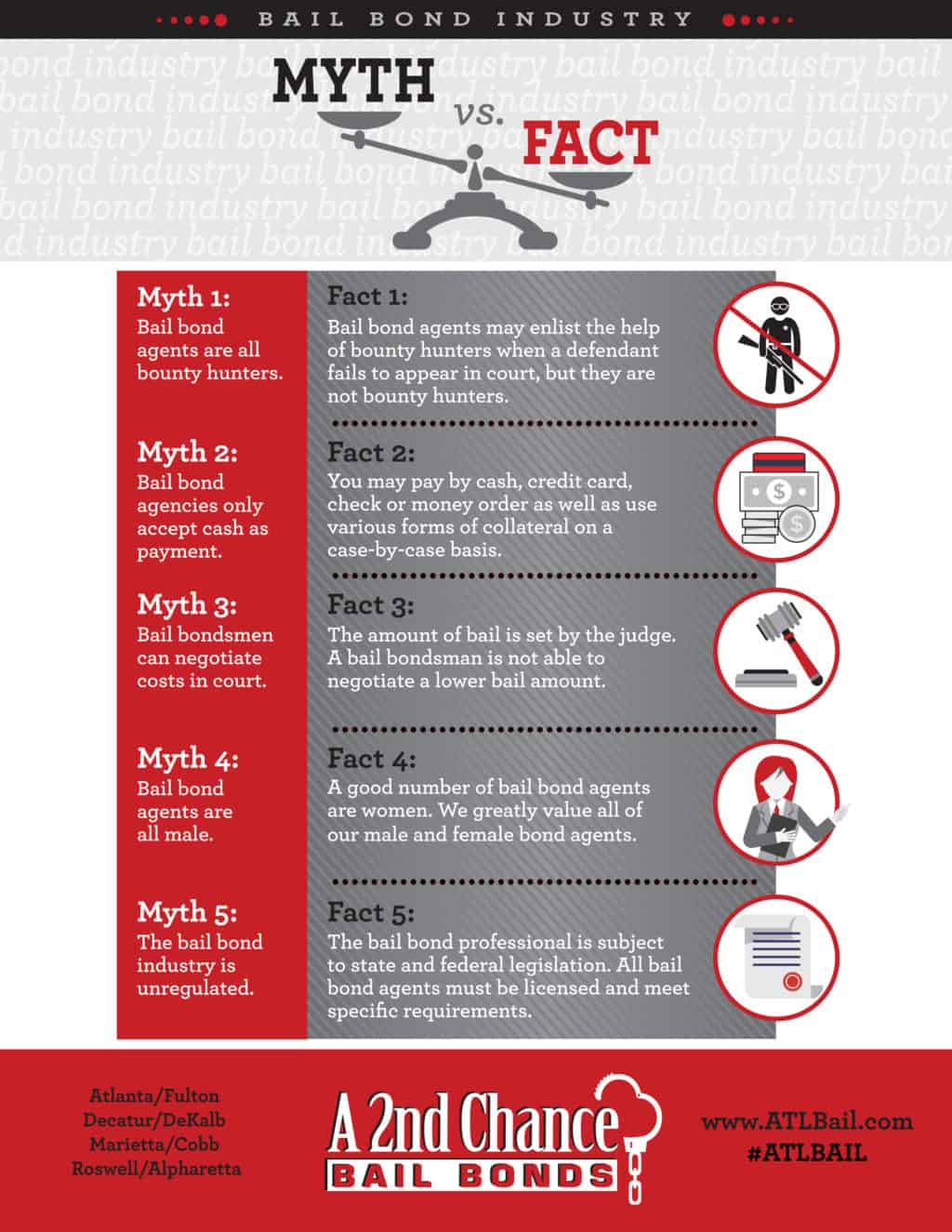
The Top 5 Bail Bond Industry Myths Debunked

Like any industry, there are many myths that surround the bail bond industry. From “Dog, the Bounty Hunter” to believing bail is negotiable, these misconceptions can make others wary when in need of our services.

With that in mind, let’s set the record straight! We’ve debunked the top five myths that we hear and provided you with the facts so that you can feel more comfortable with the bail bond process.


Categories
Blogs

Criminal Justice Algorithms Proving to be the Wrong Formula

Justice AlgorithmWhen California Governor Jerry Brown signed SB10 into law, ending cash bail in California, many were shocked when the ACLU, NAACP and Human Rights Watch rejected their support of a criminal justice reform that they had fought so heavily for. While bail reform was intended to be a step towards decreasing pre-detention rates and bringing about fairness, many argue that the alternatives to bail may be leading us in the opposite direction.

Take a look at one of the alternatives; algorithm-based risk assessment tools. Hailed by many as a solution to criminal justice bias and jail overcrowding, critics argue that these algorithms increase bias against minorities and the poor, detain low-risk individuals and release violent criminals. Furthermore, the public is not privy to the inner workings of these tools.

The chief proponent of these risk assessments is the Arnold Foundation which developed the Public Safety Assessment (PSA) and uses a point system to determine whether to release, supervise or detain defendants. However, after the computerized risk-assessment formula led judges to release defendants who were later accused of slayings, the PSA is now getting a lot of pushback in New Jersey and California. One such complaint alleges that a judge let out a convicted felon using the PSA, who later murdered a San Francisco photographer just days later. Another lawsuit was filed in a U.S. District Court after a recent killing in New Jersey.

While on the surface, such risk-assessments have good intentions, more research and thought should be given before implementing tools that can and have had dire consequences.

Categories
Blogs

Failure to Appear Rates Skyrocket Amidst Atlanta Bail Reform

Six-months into Atlanta’s cash bail reform, many waited eagerly at the Atlanta City Council meeting to hear the results. So how did we fare? Unfortunately, the preliminary results are incomplete. Less than one month after the reform was passed, a massive cyberattack hit Atlanta and thus destroyed data collection for four months out of the six-month period.

The numbers that we do have, however, should be cause for alarm. Atlanta Municipal Court Chief Judge Christopher Portis reported that 71% more defendants failed to appear (FTA) in court compared to last year. In June and July of 2017, 4,779 people skipped bond while 8,182 did not show up in June and July of this year. Moreover, the judge told City Council members that not only are they seeing an increase in failure to appear rates, they are also seeing many of those same people on repeat offenses.

This major increase in FTA, has many talking and debating solutions. City Council member Michael Julian Bond said in a recent City Council meeting, “The conclusion here — the elephant in the room — is that this is really just a bad law.” Bond goes on to say many people are not showing up to court because they have no cash incentive to do so. What’s more, victims of crimes, who, many times, are of the same socioeconomic status, are left to carry the burden.

Advocates for bail reform argue that the city has dropped the ball by not updating the way people are notified of court dates. Currently, if the accused does not show up to court, they are sent a postcard with a reminder. If they do not show, a warrant is then signed. Judge Portis believes this process may largely be failing because many of the addresses are bad. As an alternative, Tiffany Roberts with the Southern Center of Human Rights believes that a text message notification system could be the answer to this problem, however, this does not take into account bad, disposable or changed cell phone numbers.

It needs to be noted that many bail bonds companies already have a successful notification system in place. One hundred percent of all customers are called in advance of their court date. If the accused changes their number, bail bonds companies require references and, often, a co-signer, who is on the line if the accused does not show up for court. Furthermore, bail bonds companies call those that failed to appear and guide them on how to handle the problem and get back on good footing with the court.

While there is still much to see as data is collected properly and bail reform intentions are good, the preliminary results are showing a dismal picture. If the numbers of FTA rates continue to increase, we must not stay the course and, instead, work together to find a solution before the consequences skyrocket out of control.